
Insert Molding Service
Custom insert molding services for high-quality prototypes and on-demand parts. Get online quotes at a competitive price and short lead time. Rapid Tooling Production as fast as 2 weeks.
What is Insert Molding?
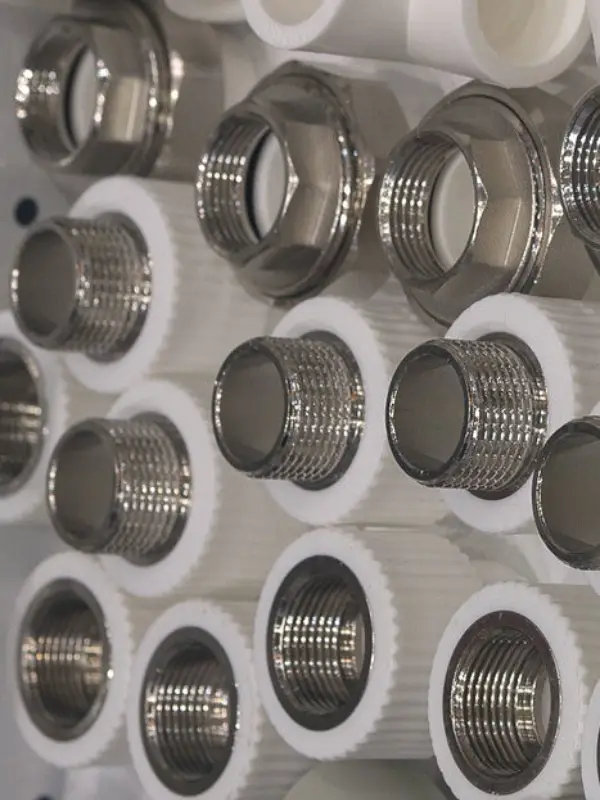
Insert molding is an injection molding technique that involves injecting a plastic material around a plastic or metal insert (but can also include ceramic or other materials) placed in a mold cavity. The insert is pre-placed in the mold cavity, after which the plastic is injected. These inserts, including threaded metal inserts for enhanced durability, provide specific mechanical or electrical properties to the final product. For example, metal inserts such as aluminum or stainless steel add tensile strength and conductivity, making insert injection molding ideal for highly durable and functional parts. On cooling, this forms a solid part that is strong and durable. Bilichitech plastic insert molding services allow you to make a strong and permanent bond between the insert and molded plastic.
Insert Molding Tooling Solutions
Bilichitech also offers customized insert molding services, assisting with design optimization, material selection, and tooling for complex geometries to meet your unique project needs from concept to production.
Rapid Tooling
Get easy design feedback and validation through superior quality prototype tooling. Create small batches of plastic molded parts with excellent injection molding prototypes. We excel at manufacturing prototype molds within days to ensure you perform functional tests and validate market interest. We implement affordable aluminum tooling to help you reduce financial risks before full-scale production.
Production Tooling
We create high-quality production molds for high-volume plastic parts production. With high-strength, durable tool steel material, our production tooling is suitable for producing hundreds of thousands of parts. We can vary materials and construction methods according to your unique requirements.
Advantages of Insert Molding
Insert molding reduces assembly and labor costs, enhances part strength and reliability, and allows for multi-material and complex component integration.
- Eliminate assembly: Insert molded parts do not require assembly because there is only one manufacturing process.
- Reduce costs: The removal of the assembly process reduces the cost of the insert molding process compared to the standard injection molding.
- Reduced part size and weight: Insert molded parts that weigh less than all-metal parts.
- Improve part strength: Insert plastic molding securely integrates metal inserts, enhancing wear resistance and structural integrity compared to traditional assembly methods.
Applications of Insert Molding
Plastic insert molding is applicable in making prototypes and full products in several industries. Key industrial applications of insert molding include:
- Consumer Goods: The custom plastic insert molding is suitable for making consumer goods due to its functional and aesthetic benefits.
- Medical Devices: Ensure the plastic is biocompatible before you choose insert molding to make devices and products such as medical implants.
- Aerospace and Automotive: Applicable in making handheld devices such as screwdrivers, scissors, dials, and knobs.
- Communication Devices: Applicable in the aerospace and automotive industry due to the strength and durability of molded parts.
Insert Molding vs Overmolding
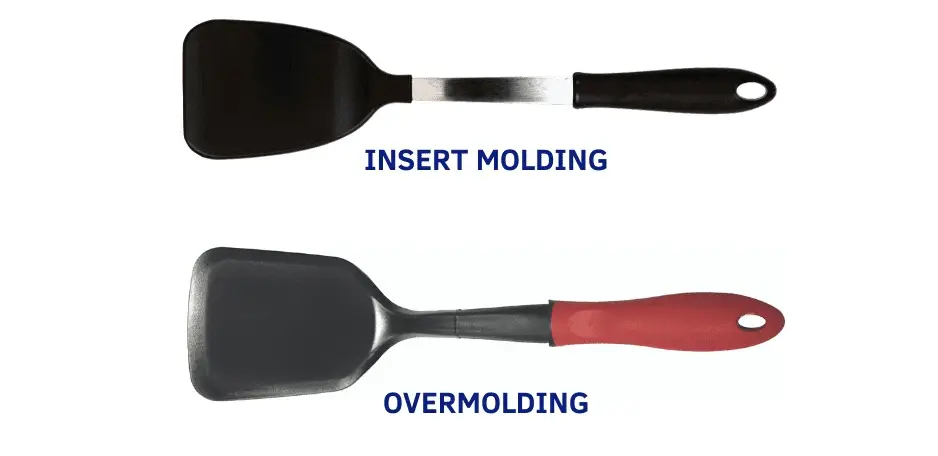
Insert molding integrates pre-formed inserts, often metal, into a single molding process, creating a unified part. Overmolding, a multi-step process, molds one material, typically a TPE, over a rigid substrate. Insert molding offers single-shot efficiency for enhanced strength and reduced assembly. Overmolding excels in creating parts with varied textures and functionalities, like a toothbrush with a rigid core and soft grip. Here’s a video to explain the vital differences between these valuable processes.